 Proposed Topic
博物馆之后:在当代媒介文化中重释中国传统的生命力
After the Museum: Reanimating Chinese Tradition in Contemporary Media Culture
研究摘要
Abstract
本研究探讨中国传统文化如何从"博物馆化"保存逻辑中脱离,通过《哪吒2》、国风短视频、戏曲混剪等青年媒介实践重新进入日常生活。结合文化研究与传播社会学理论,研究关注跨媒介传播、平台机制与参与式文化如何推动传统从"被保存的遗产"转向可感知、可重写的活态经验,并采用文本分析与案例研究方法,考察传统文化在后博物馆时代的再激活路径与未来可能性。
This project examines how Chinese tradition is moving beyond museumized preservation to re-enter everyday life through youth-driven digital media practices, from films like Ne Zha 2 and guofeng aesthetics to opera remixes and platform culture. Drawing on cultural and media studies, it investigates how transmedia circulation, affective resonance, and participatory culture transform tradition from curated heritage into lived, embodied experience—combining textual analysis and case studies to explore its reanimation in a post-museum era.
研究关键词
Keywords
1 Why This Topic?
With both my bachelor’s and master’s degrees in English, I was bound to come into contact with British Literature, in which one name stands out as the greatest of all time: William Shakespeare. The name of the renowned playwright struck me again as I interned at the ICCI of SJTU. When I was categorising video footage to be edited, the instructor interviewed in the footage talked about the modernity of Shakespeare’s works, explaining why he has became one of the most beloved writer across the world. And it inspired me to think of a Chinese equivalent... No, I was not able to name one.
As one of the major nations and biggest cultural markets around the globe, China produces and consumes a gigantic number of culture products. While the government encouraged, subsidised, and even formulated laws and regulations for the preservation of intangible culture heritages and cultural classics, these forms of tradition has remained in museums, government-sponsored projects, and documentaries, lacking the true vitality in modern times.
Why is that? And what are the younger generation doing to solve it? How are the effects and audiences’ reactions? Why have their productions worked in inheriting Chinese traditions, or why not? What can or must be improved in the future? What can be learnt from the case of Shakespeare and those in the Western entertainment industries? These are all questions I want to answer with my PhD studies. And the proper answers are critically relevant to what I am doing now.
2 Current Situations
The problem of Chinese cultural tradition today is not disappearance, but museumisation.
2.1 The Official Narrative: Museumisation and Canonization
In the Western entertainment industries, traditional culture is not preserved in jars, but reproduced to cater contemporary audiences. Coming back to Shakespeare, modern adaptations of his stories are still among the best cultural products (Shaw, 2024). Also, myths are a great source of modern adaptations, such as the Marvel Cinematic Universe, which are perfectly fit for IP transformation, and are in line with the taste of modern audiences (Szántó, 2019). Further research, analysing the film Eternals, argues that myths are a type of “language”, not simply repeating the old story but acting as a tool for self-narrative for the modern society (de Beus, 2022).
Adaptations in the West are not limited to ancient myths, but also applicable to fairy tales, for example, the story of Snow White has been adapted multiple times and has become an iconic symbol of American culture (Colburn, 2025); the question is not “Can we do it”, but “How to do it”.
2.2 The West: Old Stories in Different Contexts and Media, Yielding New Lives
Cultural traditions, or formally cultural heritages, have long been regarded to belong to museums. In official narratives, the Intangible Cultural Heritage (ICH) museums are taken as a pivotal contributor to ICH preservation (Guangming Daily, 2026). And Chinese governments at all levels act as a pivotal role in such a form of protection (Zhou, 2024). Despite endeavours to activate ICHs, they have rarely been detached from display and exhibition (Beijing Daily, 2023; China News Service, 2026), not to mention integrating with popular culture, which was also a problem.
In the recent years, there have also been actions dedicated to reverse museumisation, pushing the initially pigeonholed culture into the horizons of the public and making it part of people’s lives (Li, 2021; Guanghua Review, 2025). However, this kind of transition still separated traditional culture from popular culture, preventing it from possessing true vitality.
2.3 China’s Youth: Reinterpreting Traditional Assets
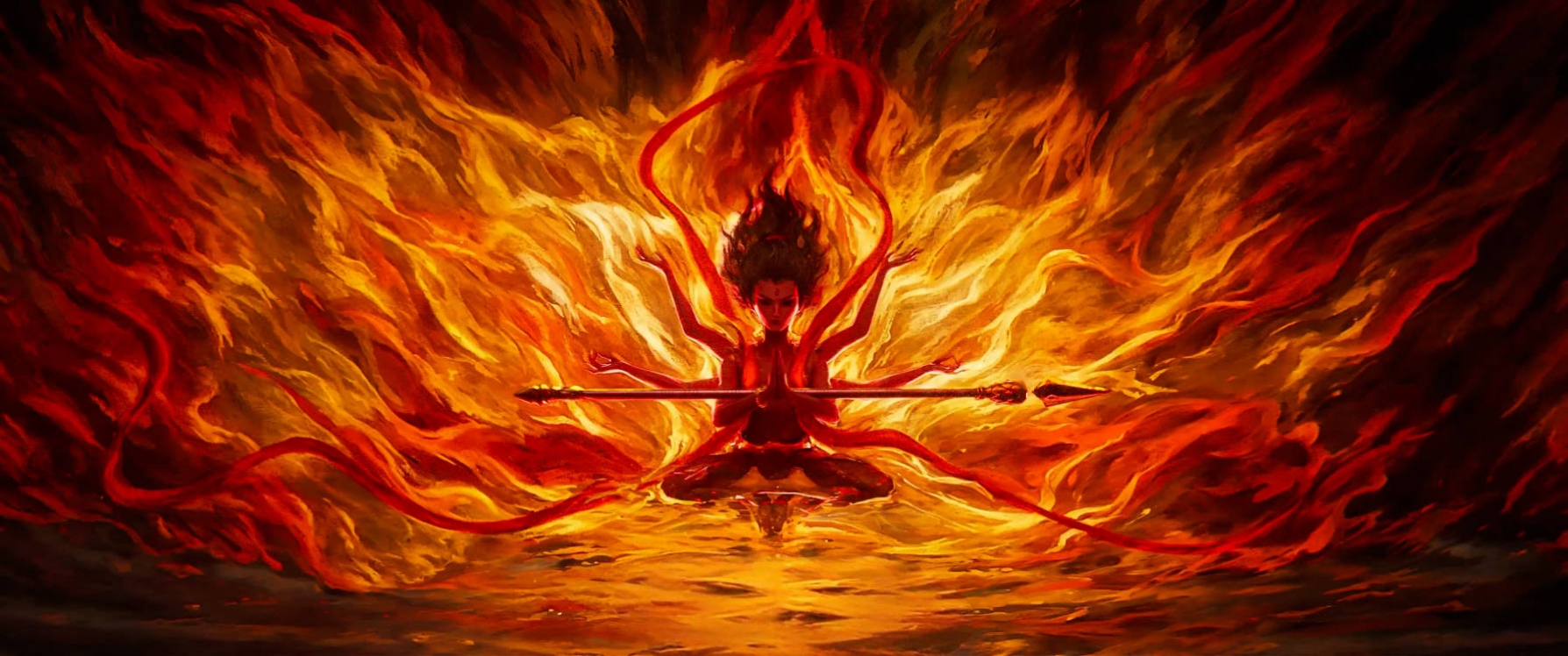
The younger generation in China’s cultural and creative industries has begun to reinterpret ancient stories, with an astonishing box office performance; yet the importance lies in the adaptation itself, where traditional culture became relevant, perceivable, and alive (Ye, 2023).
2.4 Chinese Culture in the Future
Writing furiously...
2.5 Summary: What is after the Museum?
Writing furiously...
3 Methodology and Materials
Writing furiously...
4 Significance and Applications
Writing furiously...
5 Research Timeline (Tentative)
Writing furiously...
6 Chapter Outline (Tentative)
Writing furiously...
Reference
Beijing Daily. (2023, August 30). 开馆一年多上演50余个非遗项目,活态化展示让非遗馆"火"起来 [Over 50 intangible cultural heritage projects staged in just over a year of opening, bringing the heritage museum to life through dynamic exhibitions]. Beijing Daily. https://news.bjd.com.cn/2023/08/30/10547488.shtml
China News Service. (2026, March 10). 让传统文化"可看可玩可带走" 沈阳首家非遗沉浸体验馆启幕 [Making traditional culture "visible, playable, and takeable": Shenyang’s first immersive intangible cultural heritage experience hall opens]. China News Service. https://www.chinanews.com.cn/cul/2026/03-10/10584525.shtm
Guangming Daily. (2026, January 28). 见物 见人 见生活——走,去非遗馆 [Seeing objects, seeing people, seeing life—Let's go, to the intangible cultural heritage museum]. Guangming Daily. https://news.gmw.cn/2026-01/28/content_38562269.htm
Zhou, X., Huang, J. The heritagization of cultural politics: anthropological research on Chinese cultural heritage. Int. j. anthropol. ethnol. 8, 12 (2024). https://doi.org/10.1186/s41257-024-00113-7
Li, E. (2021, October 1). How China has turned museum relics into big business. Vogue. https://www.vogue.com/article/how-china-has-turned-museum-relics-into-big-business
Guanghua Review. (2025, October 3). 故宫文创:在"故"与"新"之间探寻"生生不息"的文明密码 [Palace Museum cultural and creative products: Exploring the "everlasting" code of civilisation between "heritage" and "innovation"]. Guanghua Review. https://ghrp.cctv.com/2025/10/03/ARTIPXvvJzc4xKnbyqrLni48251003.shtml
Shaw, G. (2024, January 15). 15 of the best modern Shakespeare adaptations to watch now. Business Insider. https://www.businessinsider.com/best-modern-shakespeare-adaptations-to-stream-2024-1
Szántó, Bálint. 2019. “Mythological Archetypes in Marvel Film Adaptations”. AMERICANA E-Journal of American Studies in Hungary 15 (1). https://americanaejournal.hu/index.php/americanaejournal/article/view/45440.
de Beus, E. (2022). Marvel Presents a Global Utopia and Confronts Nationalism: Eternals as a New Mythology Forged from Western Roots. Humanities, 11(3), 60. https://doi.org/10.3390/h11030060
Colburn, R. (2025, March 16). See the Snow White cast transformed into iconic characters for Disney's (surprisingly) controversial remake. Entertainment Weekly. https://ew.com/snow-white-cast-see-the-characters-11695686
Ye, Z. (2023, July 18). Tang Dynasty poetry comes alive in animated film 'Chang An'. Sixth Tone. https://www.sixthtone.com/news/1013331